03 m Manifesto
I train divers, not certificate holders.
The difference shows in ease, in how you read the environment, and in that economy of movement that only comes with hours of immersion.
05 m The instructor
A school is, above all, a person.
Nicholas — SDI/TDI instructor, PADI MSDT, FFESSM E4 Trimix instructor. Over twenty years under the surface, and the belief that good training is built between two people — a student, an instructor, and all the time it takes.
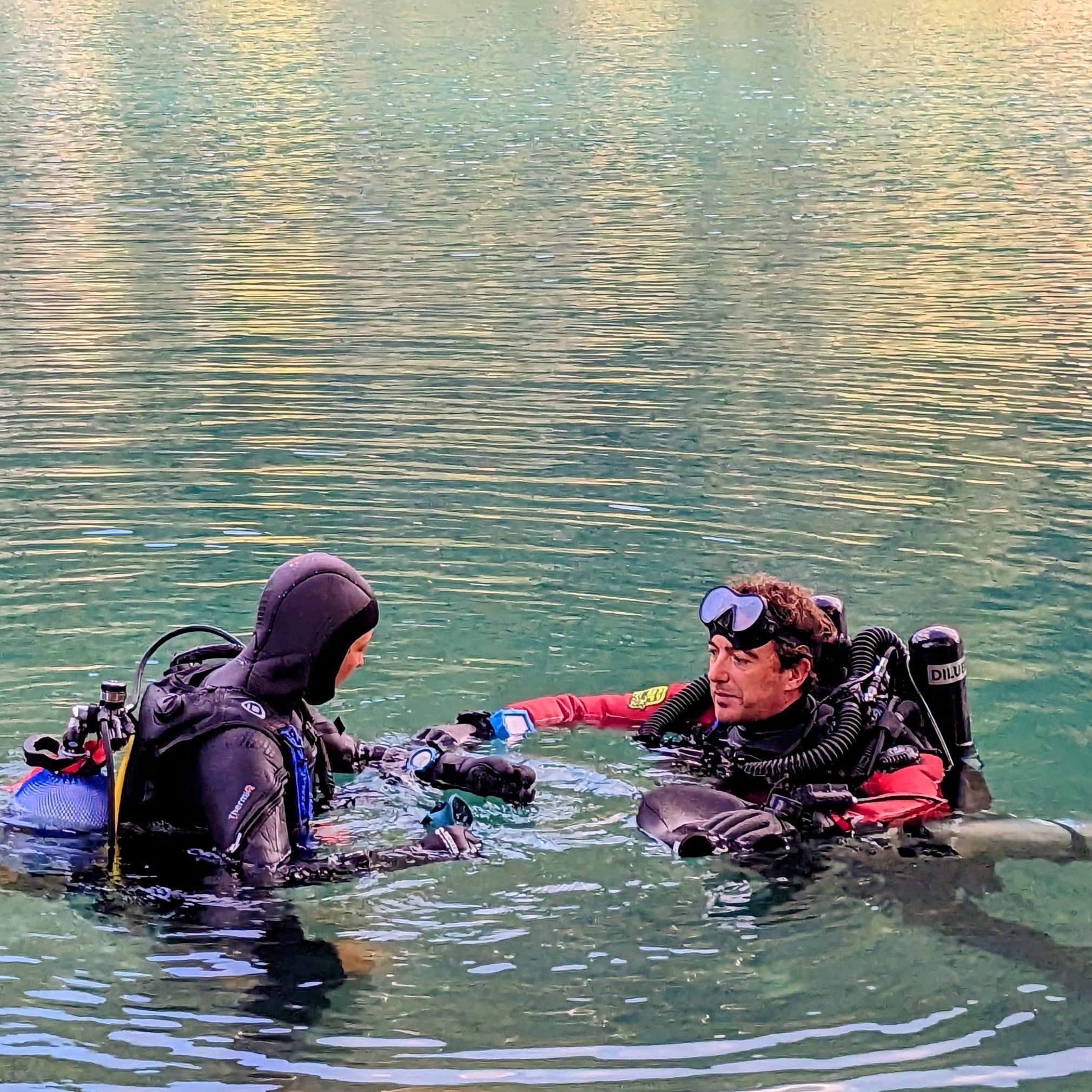
My classes are small — often one-on-one, rarely more than three students. Everyone progresses at their own pace, and the content adapts to the profile, not the other way around.
As a triple-certified instructor, I can guide you toward the curriculum that best fits your plans: SDI for recreational diving and TDI for the technical path, united in a single system; PADI, if you value the best-known card in the world; or the French federal system (FFESSM/CMAS). Or all three.
Certifications
- SDI/TDI
- #35812
- PADI
- MSDT #525399
- FFESSM
- E4
- CAH
- 2B
12 m Courses
Three schools, one instructor.
SDI/TDI and PADI share exactly the same RSTC standards — same content, same recognition. FFESSM reports to CMAS. You can follow a single curriculum, or mix all three (criss-cross) to dive without restriction wherever you go.
SDI / TDIRecreational & technical
From try-dive to trimix, one single system.
SDI is one of the founding agencies behind the RSTC standards that govern recreational diving worldwide — the same standards behind any international certification. Your prerogatives are interchangeable with any RSTC card, including for travel. The recreational path follows the same progression as PADI, up to Divemaster, the first professional level. Where SDI extends further is through TDI: Trimix, rebreather, deep diving, cavern — the most complete technical path, without ever changing agency or instructor.
- One single system, from try-dive to full technical diving
- Recreational progression: Open Water → Advanced → Rescue → Divemaster
- TDI technical path: Nitrox, advanced Nitrox, decompression, Trimix, rebreather
- Prerogatives recognised the same as any international RSTC certification
- Tailored support, simple cross-over from another certification
Courses & fees
Base rates above. The most advanced courses (Trimix, rebreather, cavern) are built case by case — get in touch so we can review your profile and define the right package.
PADIRecreational · International
The best-known name in recreational diving.
PADI is the brand the general public recognises most — a real advantage if you mostly dive on organised trips or if your future dive buddies are used to it. Underneath, the training follows the same RSTC standards as SDI: same content, same prerogatives, same progression up to Divemaster. A PADI card is recognised in 180+ countries.
- The certification most widely recognised by the general public
- Multilingual e-learning, available anytime
- Modular progression: Open Water → Advanced → Rescue → Divemaster
- Certifications issued directly by the instructor
Courses & fees
FFESSMFrench federation · CMAS
The federal route, to dive in France.
The FFESSM curriculum (affiliated with CMAS) is the way to go if you dive mainly in mainland France, Corsica, or French overseas territories (Martinique, Guadeloupe, Guyane, Polynesia, Réunion) — or if your dive buddies are on this system. The theory is denser: I teach it in person alongside the online material the federation is developing.
- Levels N1 to N4 (N4 is the Guide de Palanquée / dive leader brevet)
- Trimix E4 instructor: training up to PTH120
- Dual FFESSM/CMAS certification recognised in 100+ countries
- Theory taught face-to-face, intensive or spaced format
- Bridges available to and from SDI and PADI
Courses & fees
Federal courses need more direct interaction. Reach out so we can define a schedule that suits your pace and goals.
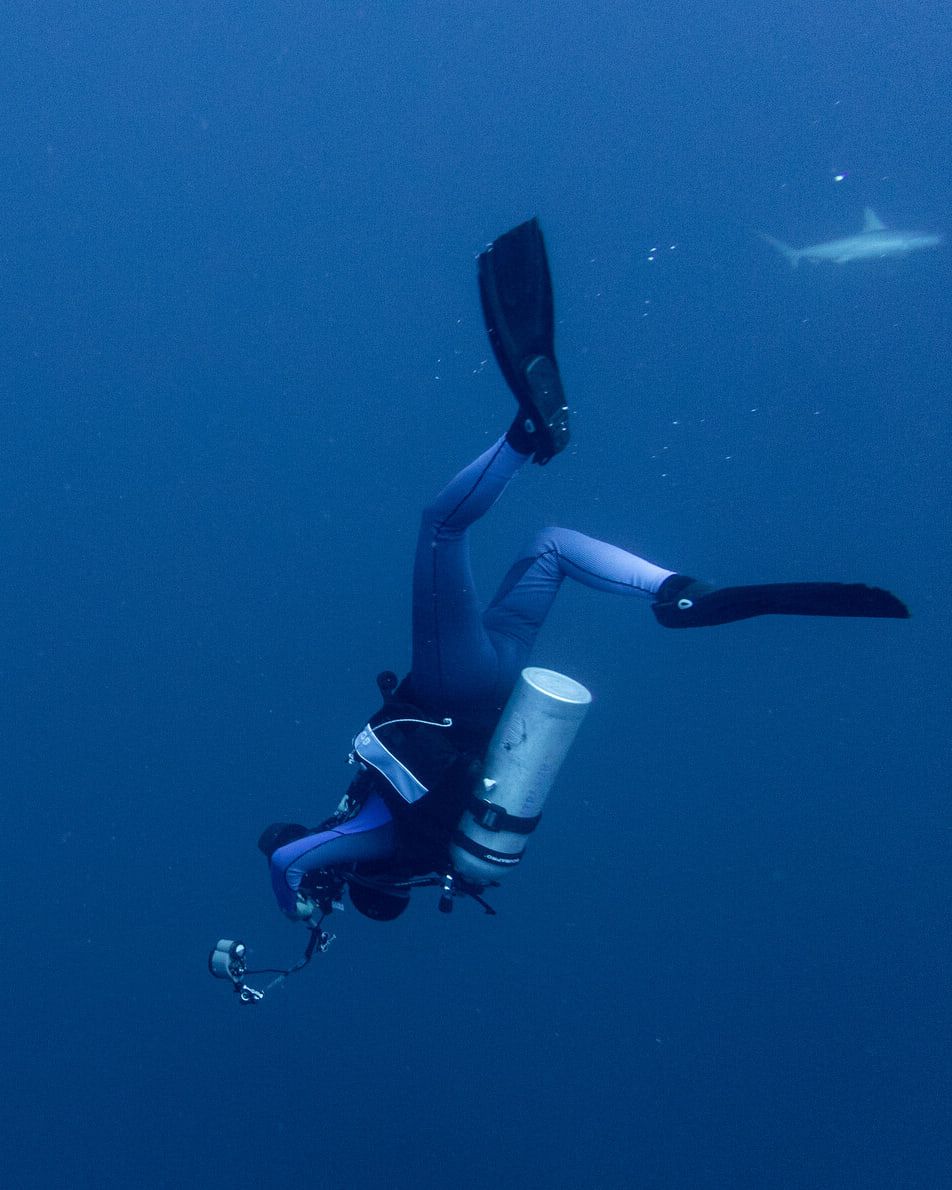
Going down starts with learning to breathe slowly.
18 m The scale
How deep will you go?
Each certification opens up a new depth. Here is how far each one takes you, from try-dive to trimix.
40 m Comparison
At a glance.
Three philosophies, overlapping prerogatives, and one principle to remember: what matters is the water under your fins — not the logo on the card.
| Criterion | SDI / TDIRec. & technical | PADIRecreational | FFESSMFederal / CMAS |
|---|---|---|---|
| Parent body | RSTC (private, international) | RSTC (private, international) | CMAS (federation) |
| Theory | E-learning + sessions | Online e-learning | In-person classes |
| Recognition | 100+ countries | 180+ countries | France, overseas, CMAS |
| Pace | Modular, technical | Fast, modular | Progressive, federal |
| First level | Open Water Scuba · 18 m | Open Water Diver · 18 m | Niveau 1 · 20 m supervised |
| Technical path | Full (Nitrox, Trimix, CCR) | Tec Rec | Trimix up to PTH120 |
| Annual licence | None | None | Yes (~ €50) |
| Best for | Going deeper | Travel, starting out | Diving in France |
Unsure? SDI/TDI is often the most complete starting point — recreational and technical in one single system, with simple bridges to PADI or FFESSM depending on where you travel. I help you plan the route.
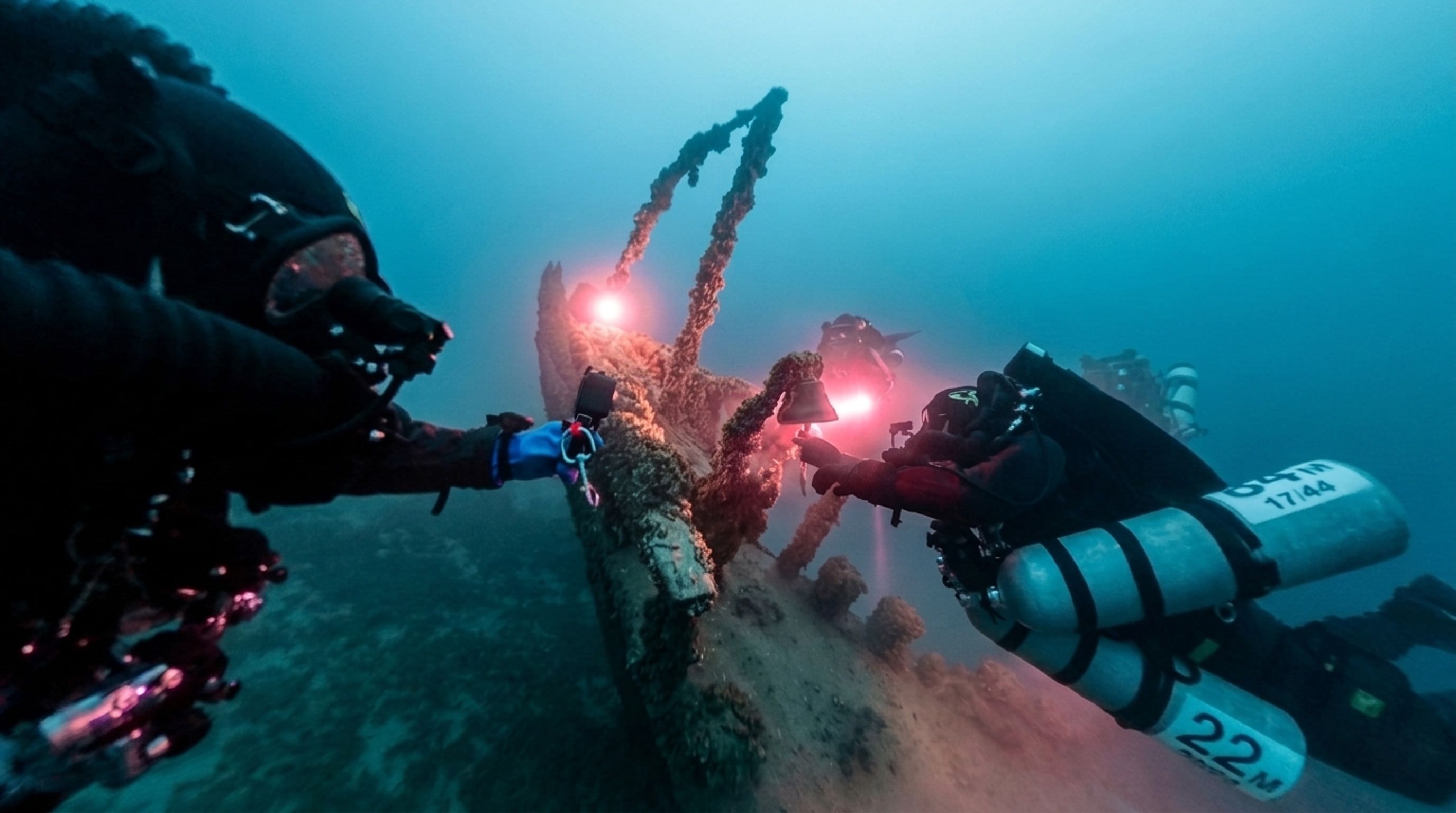
At forty metres, red is gone. Only the torch remembers colour.
40 m Specialties
Further, deeper, better.
SDI, TDI, PADI, FFESSM — same fundamentals, four paths. Pick the one that fits your goals, or mix them: crossover pathways exist. Discounts when two of you train together.
SDI
Scuba Diving International — the RSTC standard under its original name. Flexible theory, prerogatives recognised worldwide, and a direct bridge into the TDI technical path.
TDI
Technical Diving International — the path into technical diving. Enriched mixes, planned decompression, depths beyond recreational limits.
PADI
The same ten specialties as SDI, under the PADI name — for those who value that particular card. Same content, same instructor.
FFESSM
The French federation curriculum, recognised across Switzerland and Europe. From first autonomous dives to dive leadership.
30 m Locations
Three bodies of water, three atmospheres.
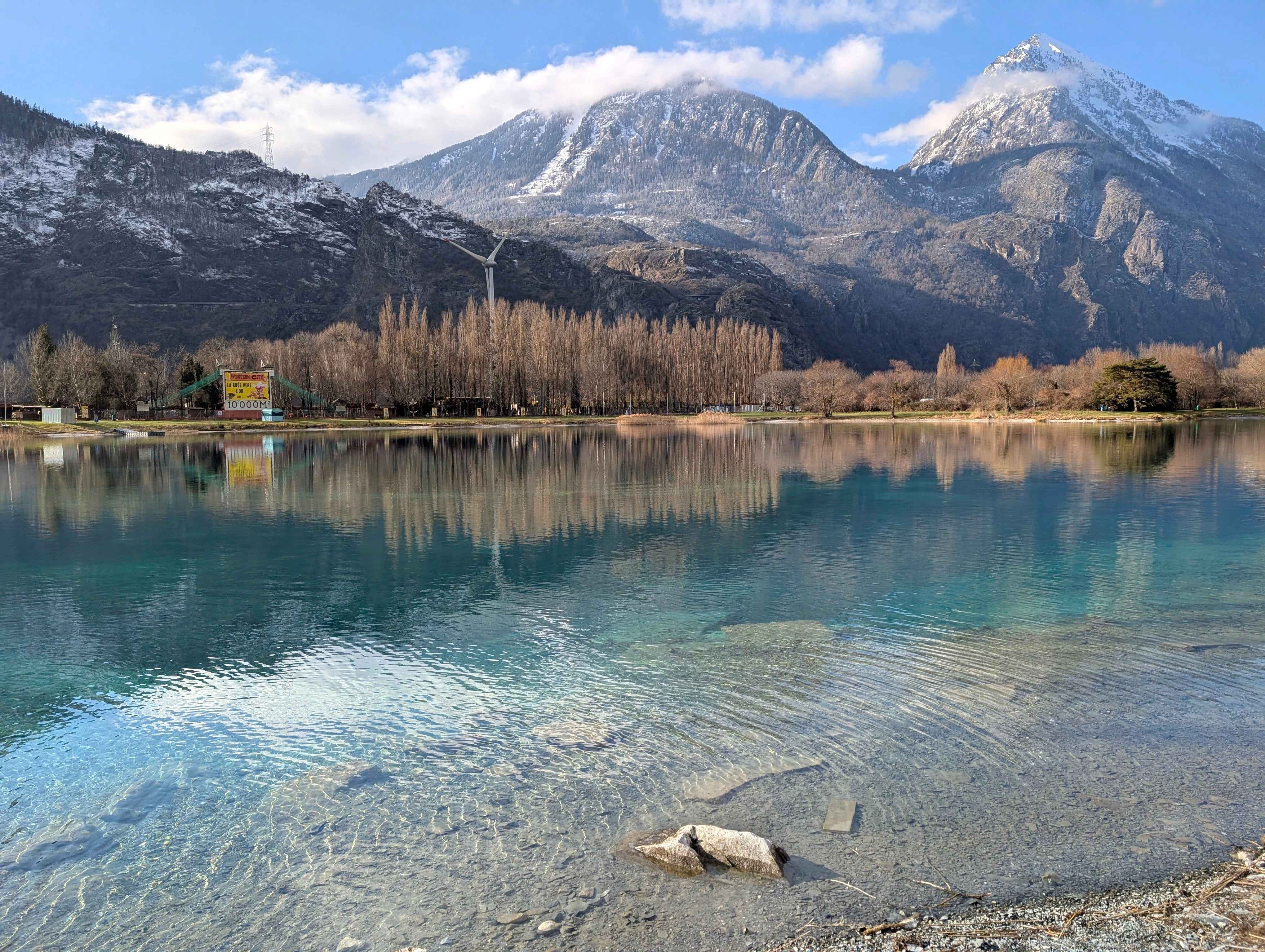
Courses run mainly at Lac du Rosel near Martigny, at Les Îles in Sion, and on Lake Geneva. Residential stages are also possible — just ask.
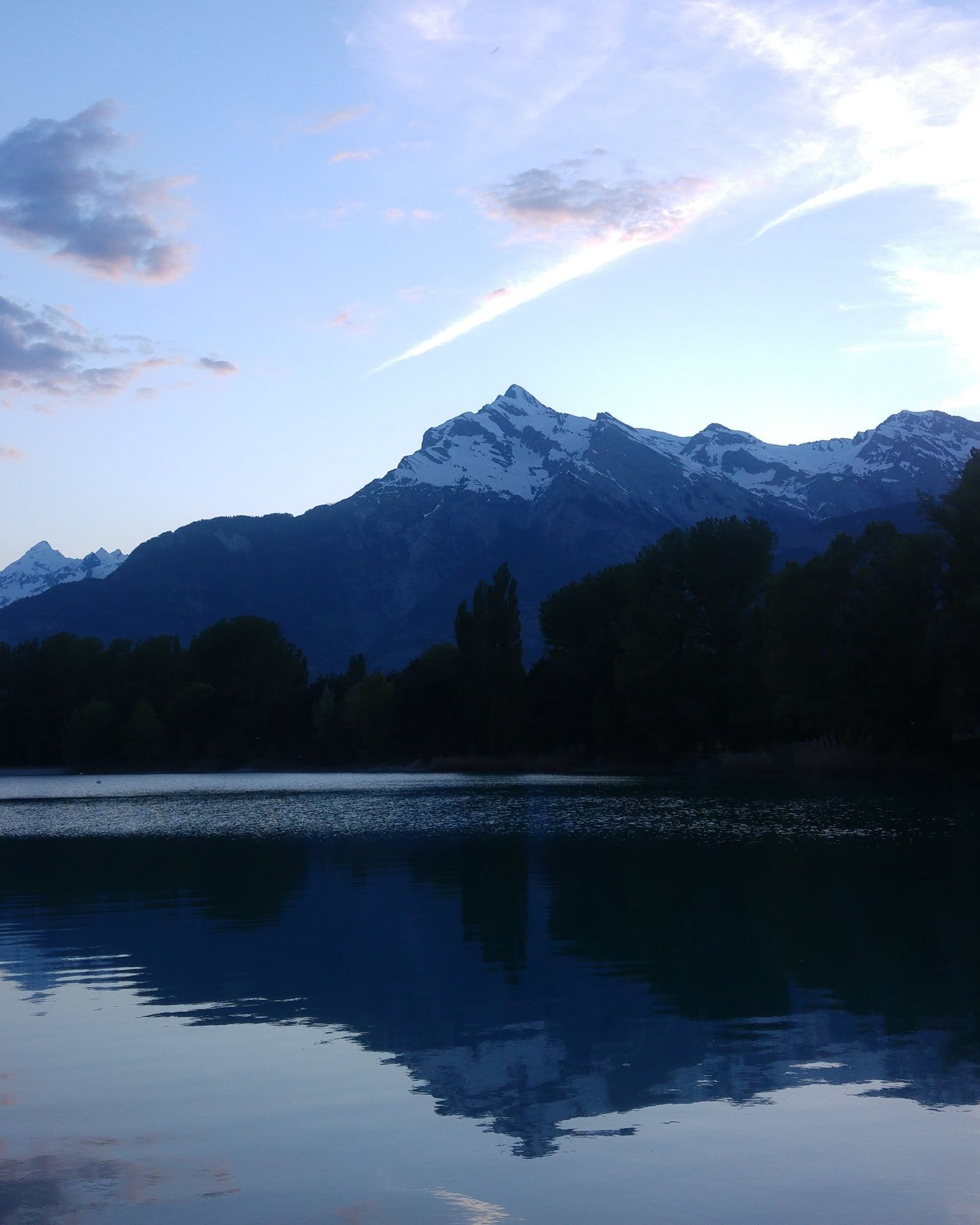
Les Îles
Sion · 46°14′N · 7°22′E, open in Google Maps
My go-to site for training dives — easy access, predictable conditions year-round.
- Max depth
- 38 m
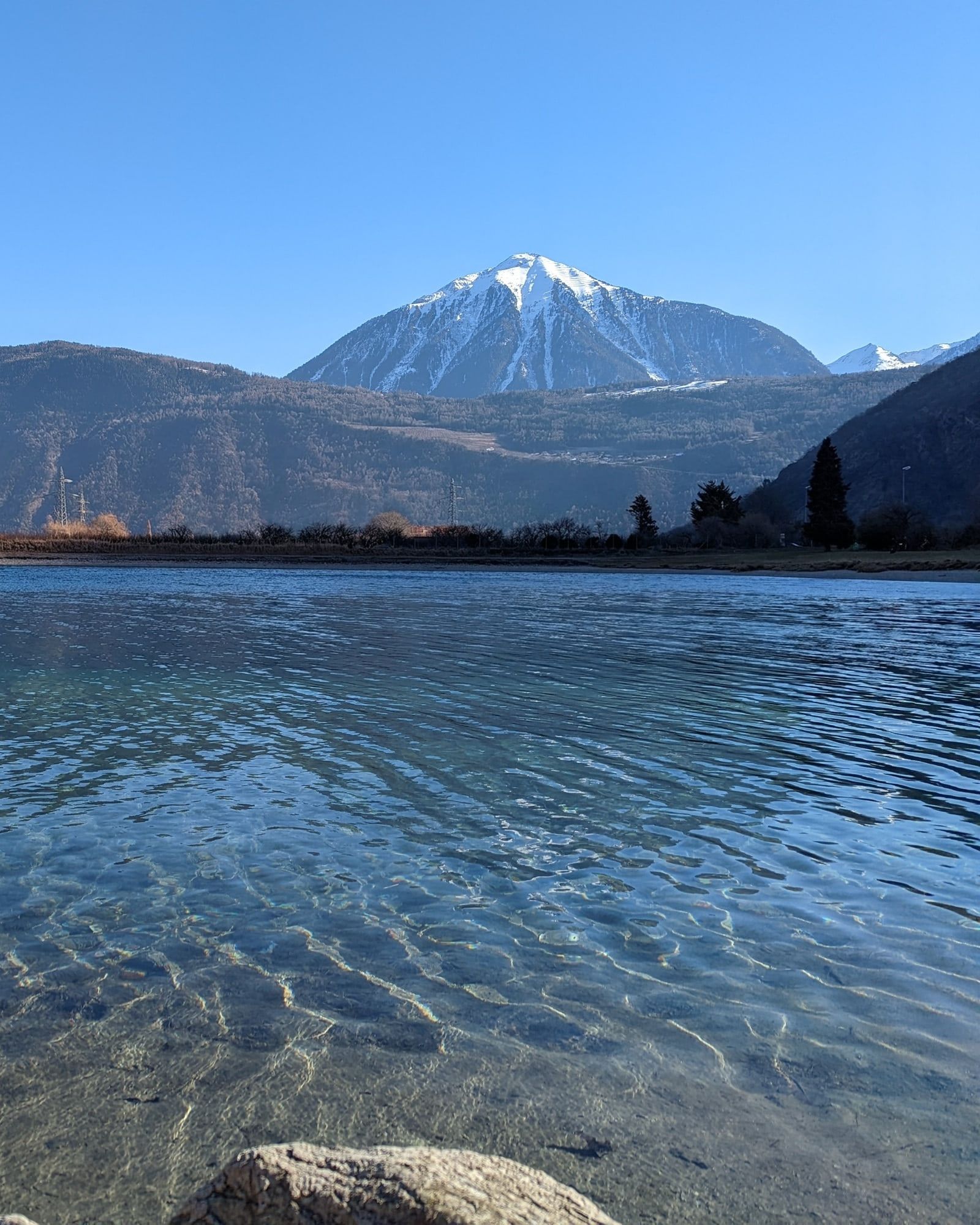
Lac du Rosel
Martigny · 46°05′N · 7°04′E, open in Google Maps
A short drive from Martigny — clear, calm, and perfectly suited to initial training.
- Max depth
- 23 m
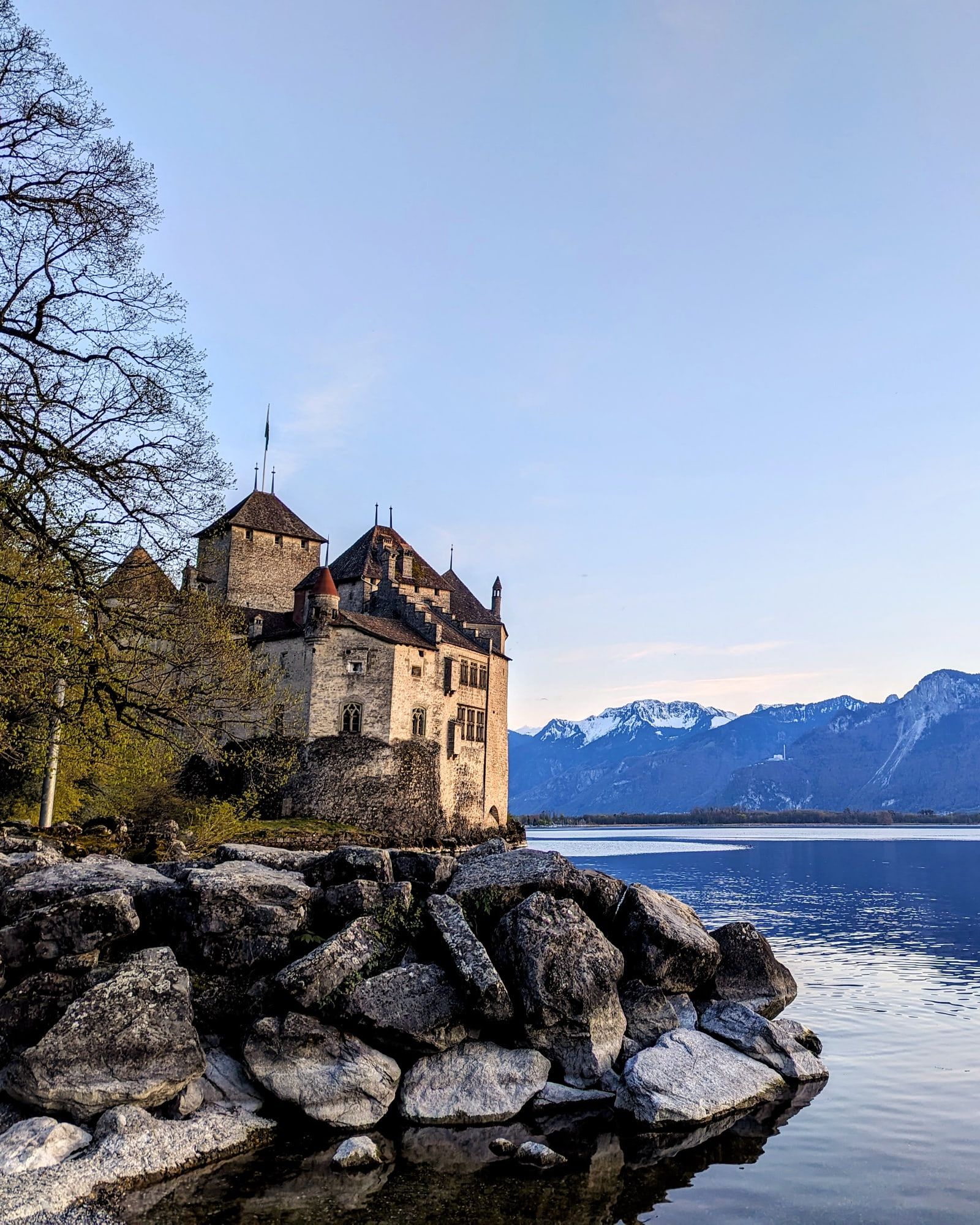
Lake Geneva
From Rivaz to Hermance · 46°24′N · 6°50′E, open in Google Maps
The great alpine blue. Deeper dives, walls, wrecks — and the unique silence of large lakes.
- Max depth
- 300 m
- Some of the sites
- Rivaz Gare · Chillon Castle · Bikini · Hermance · Tougues
20 m Gear & insurance
Before you go under.
Two things to settle before your first dive: what you wear, and what covers you.
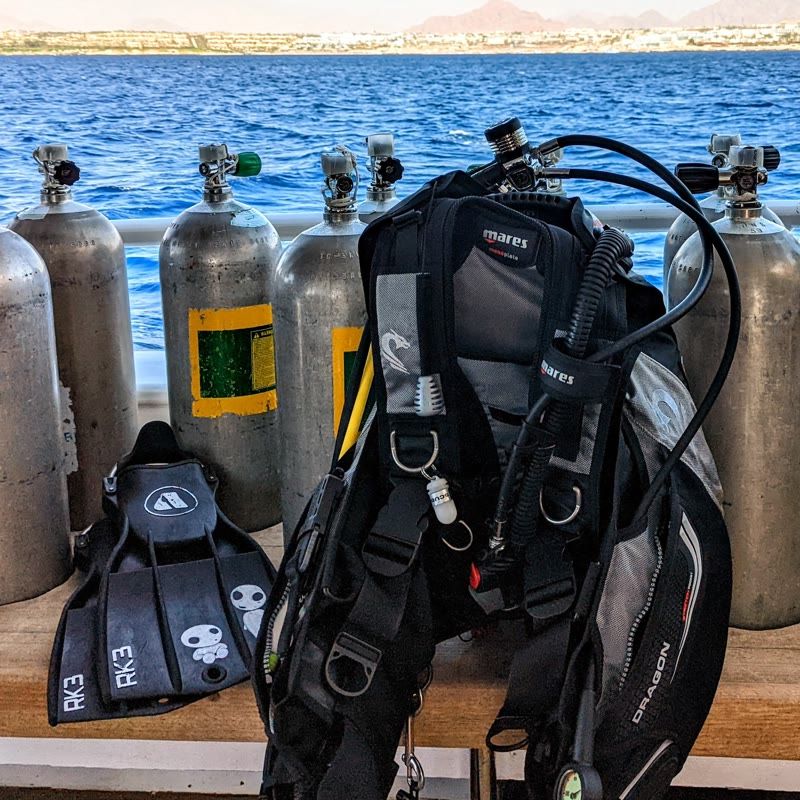
Provided, rented, or bought?
Some gear is provided based on sizes and availability. The rest is rented — and for personal pieces, a word before you buy can save a costly mistake.
Covered, properly covered.
Diving medical costs — hyperbaric chamber treatment in particular — can rise very fast. Better to talk about this before, not after.
05 m Safety stop · 3 min
Your questions, my answers.
The topics that come up most often. If yours is not here, a message is enough — I usually reply within the day.
I am a beginner — where should I start?
For most beginners, I recommend the SDI Open Water Scuba Diver: e-learning theory, fast progression, global recognition — the same standards as PADI. If you dive mainly in France, FFESSM Niveau 1 is an excellent alternative. A 10-minute call and we map the right path together.
Can I mix agencies?
Yes — and it is often a good idea. It is called criss-cross: validate some levels with SDI or PADI, others with FFESSM. Your training takes a little longer, but afterwards you can dive anywhere without restriction.
What is the difference between SDI and PADI?
In practice, none. SDI and PADI share the same RSTC standards. Certifications have the same prerogatives, are accepted in the same way everywhere, and cross-overs between the two are immediate. SDI is simply less advertised than PADI — it’s still the agency I use by default.
Do I need to buy gear before starting?
No. A large share of the equipment is provided based on available sizes. Only the mask/fins/snorkel set is worth owning — and I advise asking before buying to avoid wrong choices.
Where do courses take place?
Mainly at Lac du Rosel near Martigny, Les Îles in Sion, and on Lake Geneva. Residential training stages are also possible — reach out to discuss.
How long does training take?
From two hours for a try-dive to several weeks for a Divemaster. Open Water wraps in 3 days minimum, Advanced in 2 days, Rescue in 3 days. Pace can be intensive or spaced depending on your availability.
I am already certified elsewhere — what now?
Bring your card and logbook. Depending on your profile, a bridge or a simple refresher (ReActivate, ~2h, CHF 80) lets you get back in the water in the best conditions. We assess together before any decision.
00 m Surface
Underwater, we don’t talk. Let’s surface.
Shall we talk it through?
The best training starts with a conversation. Ten minutes to scope your project, your availability, your wishes — then we build the journey together.
Certifications
SDI/TDI #35812 · PADI MSDT #525399 · FFESSM E4 · DEJEPS 07425ED0350 · CAH 2B